Balcony House
- Erika Culmer
- 16 hours ago
- 2 min read
Updated: 3 hours ago




















Typology: Estate Home
Built in: c. 1788
Architect: Unknown
Builder: Unknown
Original Owner: Unknown
What makes this building unique: Balcony House is widely considered the oldest surviving wooden residence in Nassau, notable for its projecting wooden balcony overlooking Market Street.
Balcony House stands quietly along Market Street in downtown Nassau, yet it represents one of the most significant surviving pieces of early residential architecture in The Bahamas. Built in the late eighteenth century, the structure dates to a period when Nassau was transforming from a pirate settlement into a British colonial town. The building’s age and materiality make it particularly remarkable; while many historic buildings in Nassau are constructed from limestone, Balcony House is built largely from wood, a material that rarely survives centuries of tropical climate, hurricanes, and urban redevelopment.
The house likely emerged during the Loyalist migration that followed the American Revolutionary War. Between 1783 and the early 1790s, thousands of Loyalists relocated to The Bahamas from the American colonies. These settlers brought with them building traditions that strongly influenced the architectural landscape of Nassau. Wooden framing techniques, deep verandas, and decorative balconies became characteristic features of the homes they constructed. Balcony House reflects many of these design elements.
The building derives its name from its most distinctive architectural feature: a projecting wooden balcony that extends above the street. The balcony is supported by wooden knee braces and decorative brackets. This balcony not only served as a social space for residents but also provided shade and ventilation in Nassau’s warm climate.
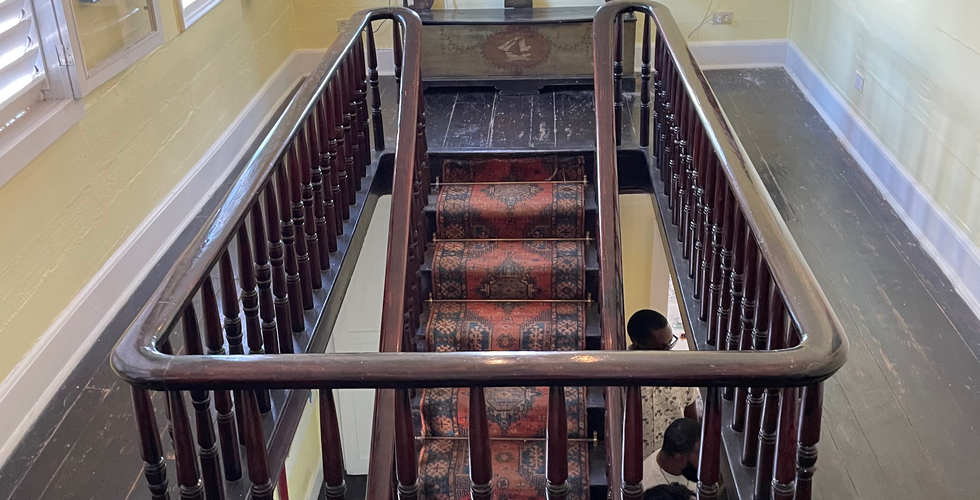
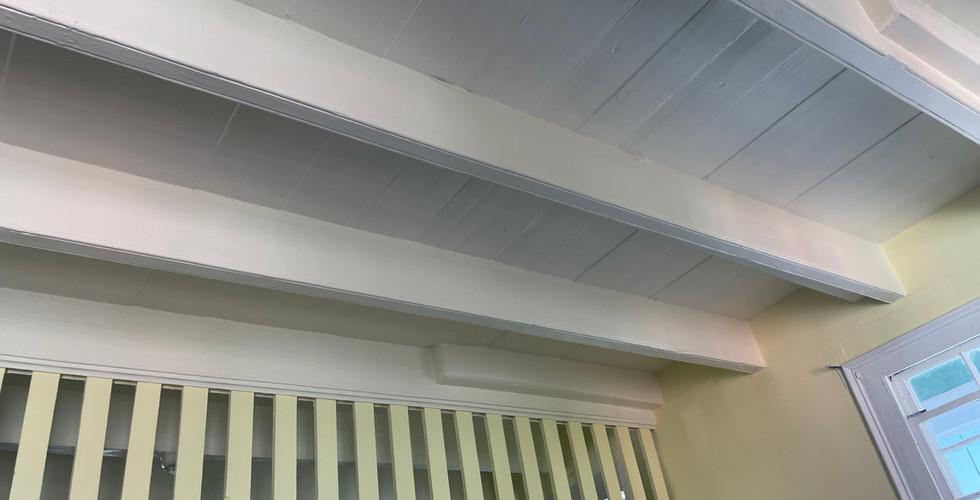
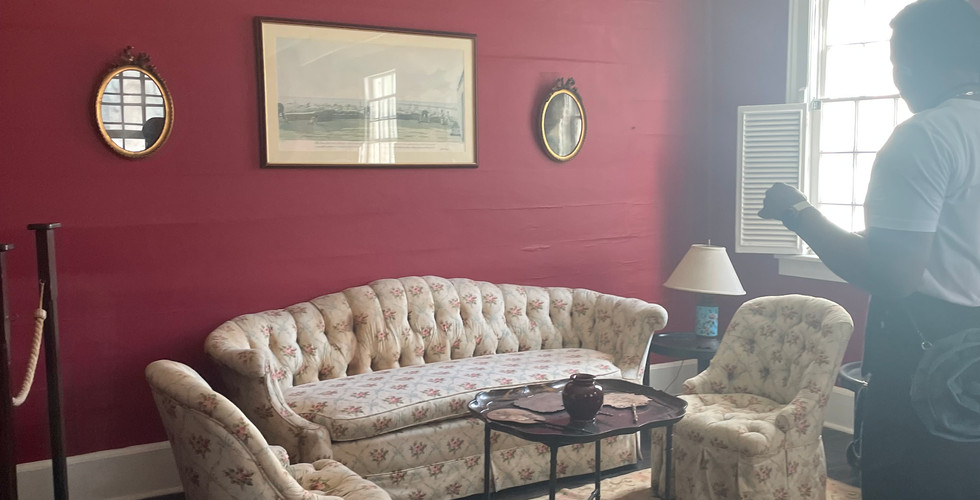
Inside the house, visitors encounter historic interior elements including a mahogany staircase and landing, reused from a ship. This detail highlights the resourcefulness of early builders in Nassau, who often reused materials from maritime trade or shipwrecks.
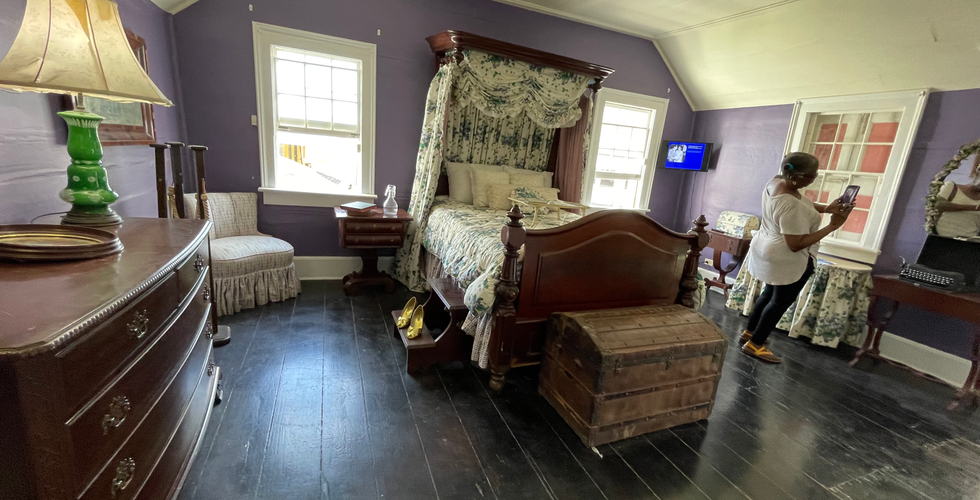
Today the building is preserved as a museum and stands as a rare example of early Bahamian residential architecture.
Contributor Notes:
The outline of this post was created by ChatGPT. We invite members of the community to add more information. Our collective stories shape our knowledge and love of these architectural gems, which reiterates the inherent value of our history making it worthwhile to preserve.
"I was very pleased to be one of the first to see the renovated balcony house right before it was officially opened to the public. Transforming Spaces, an annual bus tour typically held in May of every year, decided to add this stop in addition to the gallery spaces that are usually on the tour. This is right next to Central Bank and from my understanding owned by them. So grateful for people who also seek to preserve gems like this. The history is rich and I intend to go back and do a quieter, slower tour if possible." - Erika Culmer, March 16th, 2026
Sources:
Central Bank of The Bahamas. “Balcony House.” Accessed March 16, 2026. https://www.artcentralbankbahamas.com/balcony-house
HG Christie. “A Peek Inside Nassau’s Historical Architectural Gems.” September 26, 2023. https://www.hgchristie.com/blog/2023/09/26/peek-inside-nassaus-historical-architectural-gems/